Guides · · 11 min read
The Best Places to Stargaze in the UK
Britain still holds a handful of genuinely dark places where the Milky Way returns in full. Here are the best dark sky spots in the UK — how dark each one really gets, and where to stay the night beneath them.
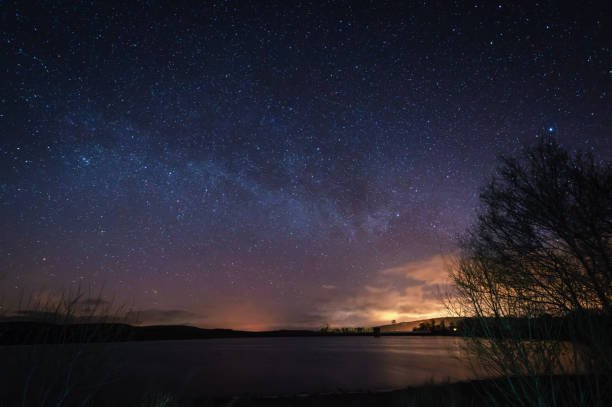
Stand in the middle of most British towns and look up, and you’ll be lucky to count ten stars.
Drive two or three hours in almost any direction, though, and the sky changes completely. The stars come back in their thousands. The Milky Way reappears, a river of light you can trace from one horizon to the other. We’ve heard about the romance that fills the sky when you travel to places like Galloway Forest and Britain’s other internationally designated dark sky parks.
That contrast is the whole point of this guide. Britain still holds on to a handful of genuinely dark places, and once you’ve seen a proper night sky from one of them, the memory sticks. Better yet, take some binoculars and you’ll be testing how good your eyesight is when looking for clusters like the Seven Sisters.
Here’s where to find them, how dark each one really gets, and where you can bed down for the night underneath.
First, what actually makes a good stargazing spot?
Less light, a clear view, and decent weather. That’s it, more or less.
Darkness gets measured two ways in this guide. The Bortle scale runs 1 to 9 — 1 being a flawless sky untouched by any glow, 9 being central London — and the sites below mostly land at 2 or 3, which is about as good as it gets on this island.
SQM puts a number on sky brightness; the best UK sites read north of 21.5, and the very darkest creep past 22. If you’d like those explained properly, we’ve written short guides to the Bortle scale and SQM readings.
One thing worth saying up front: the moon matters more than the map. A world-class dark sky site is useless under a full moon, while an average one shines on a clear, moonless night. Our best time to stargaze guide covers the seasons and moon phases if you want to plan around them.
The best dark sky places in the UK
Galloway Forest Park, Scotland
If you only ever visit one dark sky site, make it this one. Galloway was crowned the UK’s first Dark Sky Park in 2009 — one of the very first anywhere in the world — and nowhere accessible in Britain has topped it since. On a clear, moonless night, the meters here read past 23, the kind of number you’d otherwise have to fly somewhere remote to find. The Milky Way arches overhead with real structure, bright enough to throw the ghost of a shadow. The stars are scattered beyond what you’d find in any city.
Three hundred square miles of forest, hardly anyone living in it, and a lighting plan that keeps it that way. Rangers run public events through the darker months. Point yourself at Clatteringshaws Loch or the Bruce’s Stone car park and let your eyes adjust — within half an hour you’ll be picking out the Andromeda Galaxy with nothing but your own eyes. And you’re bound to find something you’ve never seen before.
If you’d rather not drive home afterwards, there are dark sky stays right inside Galloway Forest.
Best time to visit: October–March, for the deepest darkness.
Northumberland, England
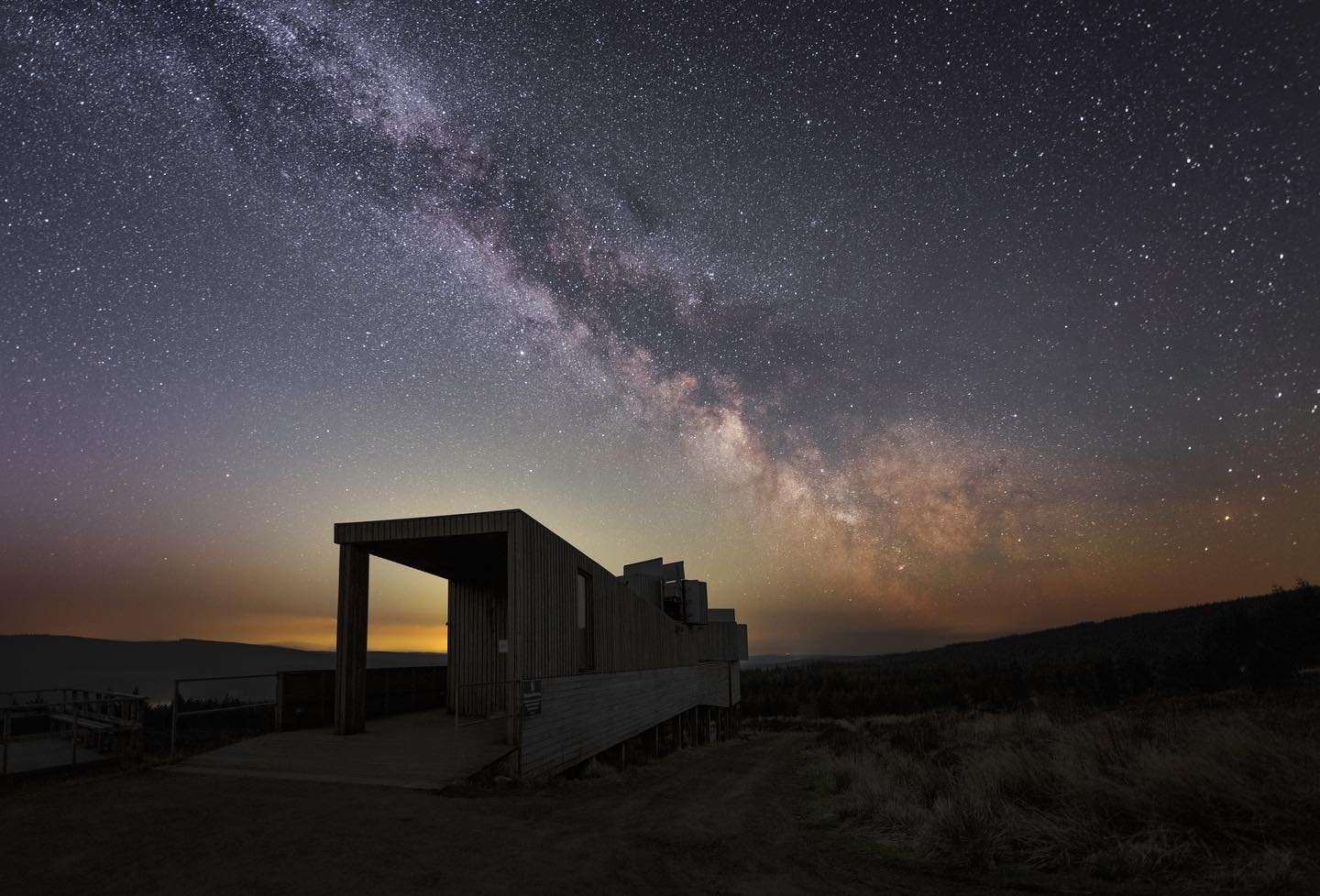
Northumberland is the big one — 572 square miles of protected night stretching across the national park and Kielder Water & Forest Park, the largest such area in England. It carries DarkSky International’s top Gold Tier rating, which it earns partly through sheer emptiness: almost nobody lives here, so there’s almost nothing to light up the sky.
Being this far north pays off twice. The skies are properly dark, and you’ve got the best odds in England of catching the aurora. It’s also the friendliest place to start if you’ve never done this before: Kielder Observatory runs events all year, from gentle beginner nights to serious astrophotography sessions, and there are marked Discovery Sites with somewhere to park and a clear horizon to look at.
It’s the region we know best, too. Starnook lists more dark sky retreats in Northumberland than anywhere else.
Best time to visit: November–February (aurora peaks around the March and September equinoxes).
Tomintoul & Glenlivet, Cairngorms, Scotland
Here’s a fact to drop at dinner: Tomintoul & Glenlivet is the most northerly Dark Sky Park on the planet. Sitting inside the vast Cairngorms National Park, that far-north perch buys you two things — deep Highland darkness, and the best shot at the northern lights of any dark sky park in Britain. This is the place where, if you’re driving from the busiest city in the UK, the sky will pulse and change before your very eyes.
It helps that the surroundings are worth a few days on their own: whisky-country glens, forest and open moor, with the Glenlivet Estate at the centre of it all. Come for the stars, stay for everything else.
Have a look at where to sleep under the Cairngorms skies at Tomintoul & Glenlivet.
Best time to visit: December–February.
Bannau Brycheiniog (Brecon Beacons), Wales
The Brecon Beacons pull off a neat trick: Bortle 2 skies in the core, despite Cardiff and Swansea sitting just down the road. Wales’s first International Dark Sky Reserve since 2013, its 500-odd square miles of mountain give you the Milky Way, the big constellations, bright nebulae and the odd meteor shower on any clear night.
Aim for the reservoirs. Usk and Crai are reliable, or the quiet ground around Llanthony Priory, where the ruins make a fine silhouette against the stars.
Find somewhere to stay in the Brecon Beacons and make a weekend of it.
Best time to visit: June–August (Perseids peak ~12 August).
Exmoor, England
Exmoor got there first. Back in 2011 it became Europe’s very first International Dark Sky Reserve, and it’s held its own ever since. Spread across Somerset and Devon, it’s thinly populated enough for genuinely dark skies yet close enough to the southern cities that you don’t need to make a pilgrimage of it. There are more than a dozen Discovery Sites to choose from, and a Dark Skies Festival each autumn if you’d like company and a telescope laid on.
For anyone in the southwest wanting a first taste of a Bortle 2 sky, it’s hard to beat.
Best time to visit: October (Dark Skies Festival).
Eryri (Snowdonia), Wales
Designated a Reserve in 2015, Eryri covers something like a tenth of Wales, and its mountains do you a favour by blocking stray light from every direction. You don’t need to scale a peak — the valleys and lakesides lower down give you sheltered, dark views with a ready-made dramatic foreground for photographs.
Best time to visit: October–February.
North York Moors, England
Ask around northern England for the best stargazing and this is the answer you’ll keep getting. A Dark Sky Reserve since 2020, the Moors combine height, emptiness and huge open horizon — ideal for the Milky Way, the August Perseids and the December Geminids. The Sutton Bank Star Hub runs events regularly, so there’s usually a night to tie a visit to.
Best time to visit: August (Perseids) / December (Geminids).
Yorkshire Dales, England
The Dales earned Reserve status the same year, and they lean into it with a much-loved Dark Skies Festival across February and March. If you’re winging it, the national park centres at Hawes and Malham are safe bets, along with the car park at Buckden and the gloriously remote Tan Hill Inn — noted as Britain’s highest pub, and a warm place to thaw out between looks at the sky.
There are roughly 30 meteor showers a year, so be sure to check the calendar to line up your stay and spend your special night under the stars.
Best time to visit: February–March (festival).
South Downs, England
The surprise on the list. The South Downs became a Reserve in 2016 despite London and Brighton glowing on its doorstep, which makes it the most reachable serious dark sky for millions of people in the southeast. Head for Bignor Hill, Devil’s Dyke, or the Moore’s Reserve, and you’ll get a real sky without committing to a long drive north.
Best time to visit: November–January.
Cranborne Chase, England
Quieter and less trumpeted than its neighbours, this Reserve sprawls across Dorset, Hampshire, Wiltshire and Somerset, and more than half of it records some of the lowest light-pollution levels anywhere in England. If crowds put you off, this is your spot.
Best time to visit: September–April.
Cornwall: Bodmin Moor & West Penwith
Cornwall does better than you’d expect. Bodmin Moor is a designated Dark Sky Landscape, and out on the West Penwith peninsula near Land’s End the sky meets the sea on nearly every side — dark Atlantic-edge stargazing with the sound of the waves thrown in. Ideal if the stars are one part of a longer Cornish break.
Best time to visit: September–April.
Isle of Rum & the Small Isles, Scotland
For the truly committed, there’s Rum, named Scotland’s first International Dark Sky Sanctuary in 2024, one of only a handful in Europe. Its neighbours Eigg and Canna, with tiny populations and next to no artificial light, offer the same near-perfect darkness. Getting here takes effort and a ferry, but the reward is a sky with essentially nothing between you and the universe.
Best time to visit: August–October.
So which one should you pick?
Chasing the darkest sky imaginable? Galloway, or Rum if you’re willing to travel for it. Hoping for the northern lights? Northumberland or the Cairngorms give you the best odds.
Short on time and based near a city? The South Downs from London, Exmoor from the southwest, or the Brecon Beacons from South Wales will all deliver without a marathon drive.
Never done this before? Northumberland, for Kielder Observatory and its beginner nights. Visiting Kielder Observatory is worth it regardless, and if you simply want a good weekend where the stars are the excuse rather than the whole plan, the Cairngorms or the Brecon Beacons reward a proper stay. Remember to go when the moon is not full and the skies are clear. Timing is everything when it comes to stargazing.
Every place on Starnook comes with the darkness of its sky stated plainly, so you can match the spot to the night you’re after.
Here’s how we measure it, or you can browse all our UK dark sky places.
A few things that’ll make the night better
Check the moon before you check the forecast — a new moon in clear skies is the dream, and a full moon will wash out even Galloway. Once you’re out there, give your eyes a good twenty to thirty minutes to adjust, keep to a red torch, and stay off your phone; one glance at a bright screen and you’re starting over. Dress for a night colder than you’re expecting, because standing still on a moor after midnight is bitter even in July, and bring a hot drink and something to sit on. Point yourself south for the brightest part of the Milky Way. And if you’re deciding between binoculars and a telescope, start with binoculars — they’ll show you the Andromeda Galaxy and the craters of the Moon with none of the fuss.
Frequently asked questions
Where’s the darkest place to stargaze in the UK?
Galloway Forest Park in southern Scotland, on most measures — its best nights read past SQM 23, about as dark as anywhere you can drive to in Britain. The Isle of Rum is comparably pristine, but you’ll need a ferry and a plan as well as a solid weather forecast.
When’s the best time of year to stargaze in the UK?
Autumn and winter give you the longest, darkest nights and the winter Milky Way; summer trades some darkness for warmth and the bright galactic core sitting low in the south. Whatever the month, aim for the nights around a new moon. The best time to stargaze really boils down to your schedule — the stars will always be there.
Can you actually see the Milky Way in the UK?
Yes. Bortle 2–3 is all you need; choose a clear, moonless night and it’s plain to the naked eye. At the darkest spots like Galloway it’s unmistakable, a bright band spanning the whole sky. The detail is truly remarkable if you’re searching for a retreat from the city.
Where can I stay to go stargazing?
Starnook lists cabins, lodges and shepherd’s huts across the UK’s darkest regions, each rated for the sky above it. Browse all our dark sky stays to find one under the night you want.
Ready to look up?
The best places to stargaze in the UK aren’t distant or exclusive. They’re a few hours away for most of the country, and the darkness costs nothing the moment the sun drops. The only thing left to decide is where you’ll spend the night.