
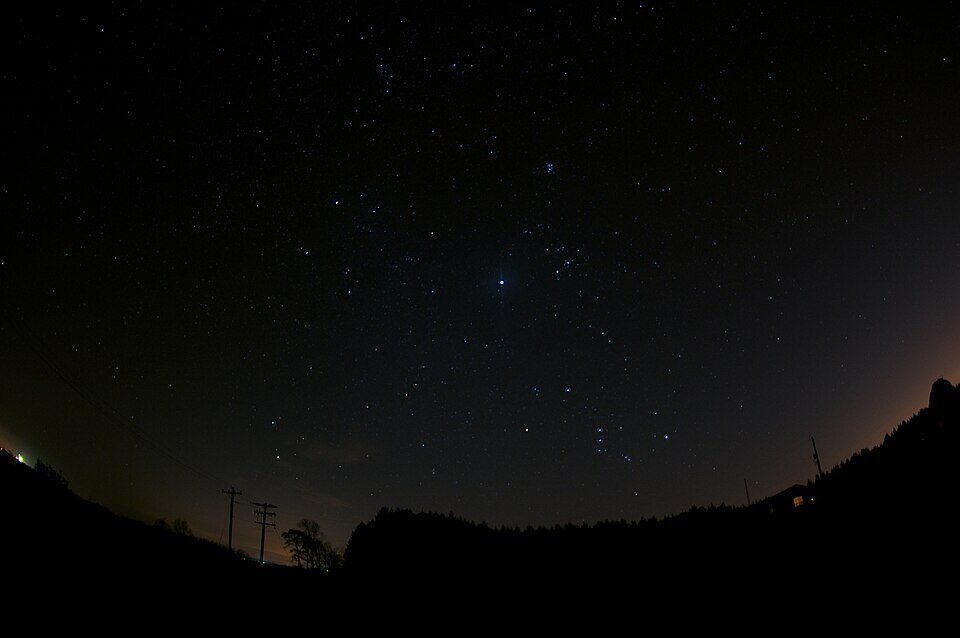
Ursid Meteor Shower
What are the Ursids?
The Ursids are produced by debris from Comet 8P/Tuttle, which orbits the Sun about once every 14 years. Every December, Earth passes through the dust it has left behind, and the particles burn up in our atmosphere as meteors.
The shower gets its name from Ursa Minor, the Little Bear. Its radiant sits near Kochab, one of the stars in the bowl of the Little Dipper, not far from Polaris, the Pole Star.
Why the Ursids are special
The Ursids are a modest shower, usually around 5–10 meteors an hour under a dark sky. What makes them worth knowing is their timing and position.
They peak around the winter solstice, when nights in the UK are at their longest, giving you more dark hours than any other shower. And because the radiant sits so close to the Pole Star, it never sets from the UK. That means Ursids can be seen all night, from dusk to dawn.
Occasionally the Ursids surprise everyone. In some years, including 1945 and 1986, rates jumped well above normal for a few hours, so they’re always worth a look.
When to see the Ursids
The Ursids are active from around 17 to 26 December, peaking on the night of 21–22 December. The peak is short, so aim for that night if you can.
Although you can see Ursids all night, the best time is the hours before dawn, when the radiant climbs highest in the north-east.
The Moon matters each year. In some years, a bright Moon close to the peak will hide most of the fainter meteors.
How to find the radiant
Start by finding the Plough, the seven bright stars of the Big Dipper, low in the north on December evenings and higher before dawn. The two stars at the end of its bowl point to Polaris, the Pole Star. The Ursid radiant lies near Kochab, a moderately bright orange star close to Polaris.
You don’t need to look straight at the radiant. Ursids can appear anywhere in the sky. If you trace a meteor back and it points towards the north, near the Pole Star, it’s probably an Ursid.
What you’ll actually see
How many Ursids you see depends on how dark your sky is. These are typical counts per hour around the peak, on a clear night with no Moon:
- Town or city (Bortle 6–9): 1 or fewer
- Village or rural edge (Bortle 4–5): 3–5
- Dark sky park or reserve (Bortle 1–3): 5–10
Every stay on Starnook is rated on the Bortle scale, so you know how dark the sky will be before you go.
How to watch the Ursids
- Face north. Unlike most showers, the Ursid radiant is in the north, so a clear northern horizon helps.
- Dress for midwinter. Late December nights are some of the coldest of the year. Wear layers, a hat and gloves, and bring a blanket or sleeping bag.
- Get comfortable. A reclining chair or mat makes it far easier to watch for an hour.
- Let your eyes adjust. Allow around 20 minutes, and keep your phone off or on red night mode.
- Combine it with other sights. On a dark December night, you’ll also have Orion, the Pleiades and the winter Milky Way to enjoy.
Where to watch the Ursids in the UK
With only a handful of meteors an hour, a dark sky makes all the difference. The UK has some of the darkest skies in Europe, protected in a network of International Dark Sky Parks and Reserves across England, Scotland and Wales. Explore all the UK’s dark sky places to find the one nearest you, or browse all our dark-sky stays for a winter escape under properly dark skies.
Ursid meteor shower FAQs
When do the Ursids peak?
Around the night of 21–22 December, with the shower active from about 17 to 26 December.
How many meteors will I see?
Around 5–10 an hour under a dark sky in a typical year, though occasional outbursts bring more.
Can I see the Ursids all night?
Yes. From the UK, the radiant never sets, so Ursids can appear at any time of night, though the hours before dawn are best.
Where do I look?
Anywhere in the sky, but a clear view to the north helps, as that’s where the radiant sits.
Do I need a telescope?
No. Meteors are best seen with the naked eye.