
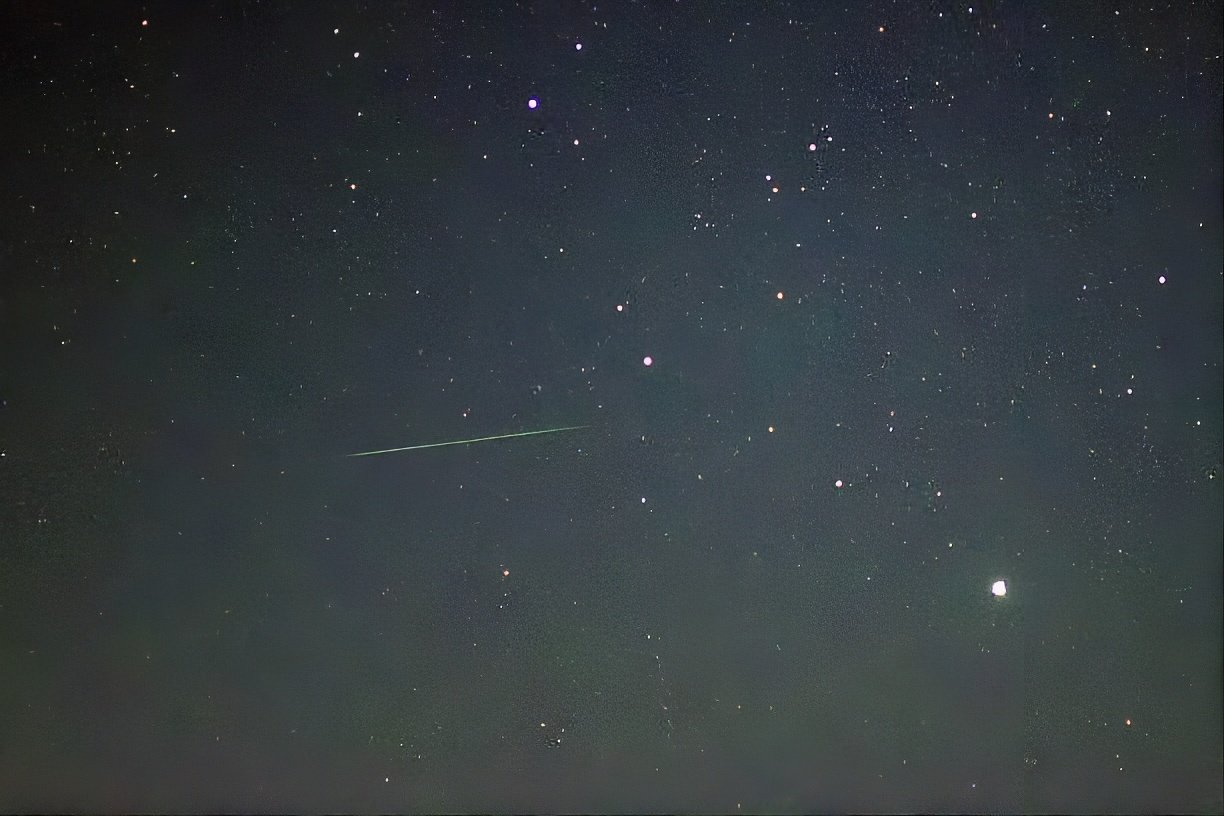
Orionid Meteor Shower
What are the Orionids?
The Orionids are made from the dust of Halley’s Comet, the most famous comet of all. Halley orbits the Sun about once every 76 years and was last seen from Earth in 1986. You won’t see the comet itself until 2061, but its debris is still there, and every October Earth passes through it.
Halley’s dust is responsible for two meteor showers a year: the Orionids in October and the Eta Aquariids in May. So every Orionid you see is a tiny piece of one of history’s best-known comets.
The shower gets its name from Orion, the constellation the meteors appear to come from.
Why the Orionids are special
The Orionids are some of the fastest meteors you’ll see, entering the atmosphere at around 41 miles per second. Many are bright, and some leave glowing trails, called persistent trains, that can linger for a second or two after the meteor has gone.
They’re a moderate shower, with around 10–20 meteors an hour under a dark sky. But their peak is broad and flat, lasting several nights, which makes them a forgiving shower to plan around.
When to see the Orionids
The Orionids are active from around 2 October to 7 November, peaking on the night of 21–22 October. Because the peak is broad, the nights either side are almost as good, so if the 21st is cloudy, try the 20th or 23rd.
The Orionids are a pre-dawn shower. Orion rises late in the evening in October and climbs higher through the night, so the best time to watch is after midnight until dawn begins to brighten the sky.
The Moon makes a difference each year. A bright Moon will hide the fainter meteors, so check its phase before you plan your night.
How to find the radiant
In the early hours of an October morning, look south-east for Orion. Its three belt stars in a short, straight line are easy to spot. The radiant sits above them, near the raised club of Orion and just above the red star Betelgeuse.
You don’t need to look straight at the radiant. Orionids can appear anywhere in the sky, and those further away often have the longest trails. If you trace a fast meteor back towards Orion, it’s an Orionid.
What you’ll actually see
How many Orionids you see depends on how dark your sky is. These are typical counts per hour around the peak, on a clear night with no Moon:
- Town or city (Bortle 6–9): 2–5
- Village or rural edge (Bortle 4–5): 8–12
- Dark sky park or reserve (Bortle 1–3): 15–20
Every stay on Starnook is rated on the Bortle scale, so you know how dark the sky will be before you go.
How to watch the Orionids
- Set an alarm. Get some sleep in the evening, then head out after midnight, when Orion is higher.
- Find a dark spot. Away from streetlights you’ll catch more of the fainter, faster meteors.
- Dress for the cold. Late-October nights can drop close to freezing before dawn, especially in the hills.
- Lie back. A reclining chair or mat makes it easy to watch for an hour or more.
- Watch for trains. After a bright Orionid, keep looking where it vanished. You may see a faint glowing trail.
Where to watch the Orionids in the UK
The UK has some of the darkest skies in Europe, protected in a network of International Dark Sky Parks and Reserves across England, Scotland and Wales. Explore all the UK’s dark sky places to find the one nearest you.
For somewhere to stay, see our guide to the best places to stay for the Orionids in the UK, or browse all our dark-sky stays.
Orionid meteor shower FAQs
When do the Orionids peak?
Every year around the night of 21–22 October, with the shower active from about 2 October to 7 November.
How many meteors will I see?
Around 10–20 an hour under a dark sky.
What time is best?
After midnight until dawn, when Orion is highest.
What causes the Orionids?
Dust from Halley’s Comet, which also causes the Eta Aquariid meteor shower in May.
Do I need a telescope?
No. Meteors are best seen with the naked eye.